


 Sell To Us Add Skype
PoE 2 0.4 Endgame: Mapping, Best Atlas, What to Do After the Campaign
Reaching the end of the campaign in Path of Exile 2: The Last of the Druids is only the beginning. Once the story ends, the game opens into a deep and rewarding endgame system centered around mapping, Atlas progression, and pinnacle boss encounters. For new or returning players, this transition can feel overwhelming, but PoE 2 does a much better job than before at guiding you through what comes next. This guide breaks down how mapping works in patch 0.4, how to progress efficiently, what Atlas points to prioritize, and how the endgame systems connect together.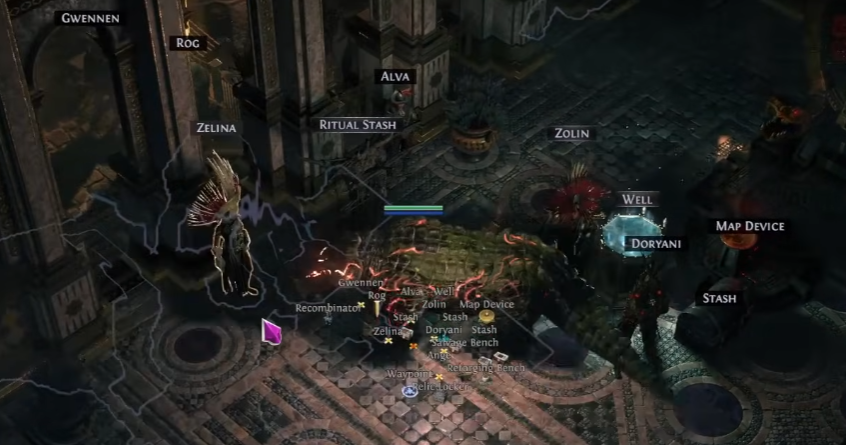
Starting the Endgame: Ziggurat Refuge and Your First Maps
After completing the campaign, you’ll be taken to Ziggurat Refuge, where Doryani introduces you to the map device. This is where the PoE 2 endgame begins. You’ll be given your first map, and from here, your Atlas expands outward in all directions.
Unlike older Atlas systems, there is no “correct” direction to travel. You simply explore outward, completing maps and moving toward notable nodes and towers. Completing towers is especially important, as they reveal larger areas of the Atlas, helping you plan your progression more efficiently.
Once you’ve completed your first map, you’ll unlock access to your hideout, where you can freely place your map device, stash, and vendors. Optimizing your hideout layout early saves a massive amount of time later on.
Atlas Quests and Progression Milestones
PoE 2’s quest system does an excellent job of guiding endgame progression. Early Atlas quests will ask you to complete Corrupted Nexus maps at increasing tiers (Tier 1, Tier 3, Tier 5, and so on). These maps must be run rare, which means using an PoE 2 Orb of Alchemy on them.
Completing these objectives rewards Atlas passive skill points, which are crucial for shaping your endgame farming strategy. Over time, you’ll also be guided toward endgame bosses, culminating in a fight against The Arbiter, the current pinnacle boss of PoE 2.
The Burning Monolith, which leads to the Arbiter, is always within reach on the Atlas and can be accessed directly once unlocked.
Atlas Passive Points: What to Take First
Early Atlas points should focus on power and survivability, not greed. One of the strongest early priorities is Essence nodes, as they help you craft resistance gear quickly. Being resistance-capped—ideally even including Chaos Resistance—makes mapping dramatically safer.
Other strong early options include:
Waystone Effect nodes: These make maps more dangerous, but also far more rewarding.
Increased pack size and map modifiers: More monsters equals more loot and experience.
Avoiding mechanics you dislike: You are never forced into content you don’t enjoy.
Strongboxes are decent early, but many players eventually shift into more rewarding mechanics like Abyss or Ritual.
How Maps Work in PoE 2
Each map has a fixed layout and boss, even though the visuals are procedurally generated. If you recognize a map name, you already know what boss to expect. Every map now contains a boss, making boss farming and progression more consistent.
Maps also belong to biomes, though biome choice has minimal mechanical impact. More important are special map nodes, such as lineage maps that drop powerful support gems, or maps tied to endgame progression systems.
Unique Maps and Bonus Atlas Points
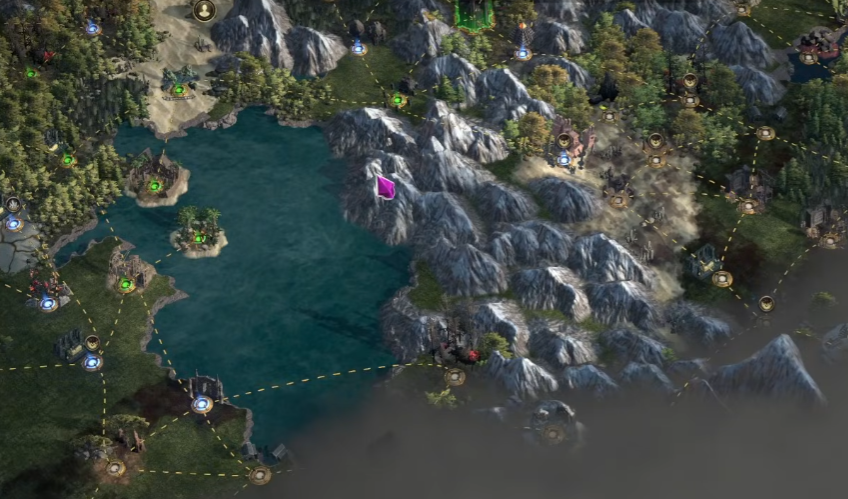
Unique maps are easily recognizable by their distinct icon and reward two Atlas skill points each. There are five unique maps total, granting a total of ten extra points. These are well worth prioritizing when you encounter them.
Hovering over Atlas nodes provides detailed information about what they contain, making planning much easier than in earlier PoE versions.
Corrupted Nexus and Cleansed Zones Explained
Corrupted Nexus maps are a core part of PoE 2’s endgame. By default, these areas spawn Beyond-style demons, but they also roll additional modifiers such as extra Strongboxes, increased area level, or special objectives.
When you defeat the final boss in a Corrupted Nexus, a second powerful enemy spawns. Killing it rewards a book that grants Atlas points (if you’re still on that quest step) and cleanses the area.
Cleansed zones remain on the Atlas and gain additional monster packs and special rewards. Some high-value items—such as Fracturing Orbs—can only drop in these areas, making them extremely worthwhile to farm.
Item Level, Map Level, and Why It Matters
Item level is critical in PoE 2, as some modifiers only appear at item level 82, the highest tier currently available. Reaching item level 82 requires stacking:
+1 area level from Corruption or Cleansed zones
+1 monster level from Irradiated precursor tablets
Tier 16 maps (unlocked by corrupting Tier 15s)
Even Tier 80–81 maps can drop item level 82 gear from rare monsters and bosses, making them a solid farming target.
Sustaining Maps and Using the Reforging Bench
Map sustain is much easier in PoE 2. Doryani sells maps cheaply for gold, and the Reforging Bench allows you to upgrade lower-tier maps into higher ones. This makes it easy to oversustain maps and aggressively corrupt them in pursuit of Tier 16s.
PoE 2 Gold has few sinks, so buying maps and reforging them is almost always worth it.
Map Boss Difficulty and Boss Atlas Tree
Map bosses scale significantly through the Boss Atlas tree. You’ll unlock points by defeating increasingly difficult bosses, anomaly bosses, Citadel bosses, and finally the Arbiter.
Each point makes bosses noticeably harder, even regular map bosses. If content feels overwhelming, you can always remove points temporarily and reallocate them later.
Arbiter and Citadel Bosses
Citadel bosses drop fragments used to access the Arbiter. There are multiple variants (red, orange, white), each dropping different fragments. The first Arbiter version allows infinite attempts, making it an excellent learning experience despite its difficulty.
Expect a very punishing fight—many players die dozens of times before succeeding—but persistence is rewarded.
Mapping Strategy: Efficiency Over Full Clears
Efficient mapping doesn’t require full clearing. Many players rush toward the boss, clear the densest monster packs, and move on. Full clears are rarely time-efficient, and PoE 2 rewards momentum.
Ultimately, there’s no wrong way to play—if full clearing is fun for you, do it.